How the UK's national debt as a percentage of GDP has changed since 1979
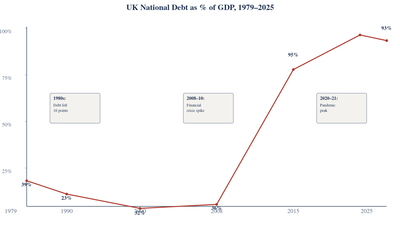
UK national debt fell sharply in the 1980s, rose in the early 1990s and after 2008's financial crisis, and spiked during the pandemic before falling slightly.
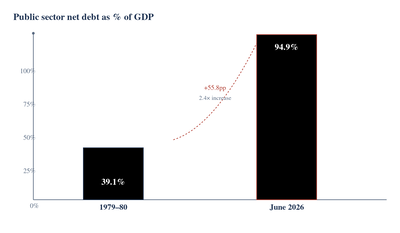
UK national debt has risen from 39% of GDP in 1979 to 95% in 2026, driven by recessions, the financial crisis, the pandemic and ongoing spending deficits.
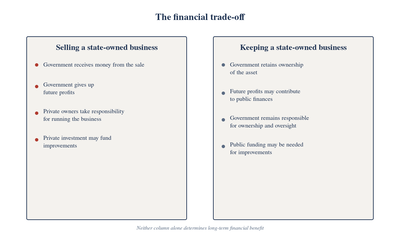
The government sold state-owned businesses to raise revenue and reduce state involvement in industry. Whilst privatisation brought substantial one-off money, the relationship between these sales and national debt reduction was more complex than a simple transaction.
Why do UK governments often defer important policies to the next parliamentary term?
Governments delay major reforms for electoral strategy, legislative complexity, budget planning and to avoid immediate political backlash, whilst signalling long-term intent.
Criminal convictions against civil servants do happen, but remain relatively uncommon due to internal processes and legal protections
Civil servants can face criminal charges, but prosecutions are rare because misconduct is often handled internally, intent is difficult to prove, and political considerations sometimes intervene.
Is the House of Lords value for money? Weighing its cost against its scrutiny role and democratic legitimacy.
The House of Lords costs £120 million yearly and has over 800 members. Supporters cite its expertise and legislative review; critics question its cost, unelected nature, and efficiency.
How poor planning and weak oversight have cost taxpayers over £300 billion on failed projects
A comprehensive examination of major government spending failures across the NHS, defence, infrastructure and welfare, identifying systemic issues in procurement, project management and accountability.
What is the total cost of MPs and civil servants in the UK?
MPs and their support staff cost around £500-600 million annually. Civil servants supporting government cost £15-17 billion yearly, though costs directly attributed to MPs alone are difficult to isolate precisely.
What procedures should a civil servant follow when they discover an issue within government?
Civil servants can report problems through internal line managers, departmental whistleblowing officers, external agencies like the NAO, or parliamentary committees. The Public Interest Disclosure Act protects them from retaliation.
Governments balance economic considerations with political, social, cultural, ideological, security, environmental and technological factors when making policy decisions.
Understanding the key responsibilities governments have in modern society
Governments maintain law and order, provide public services like healthcare and education, manage economies, ensure social welfare, protect national security, conduct foreign policy, protect the environment, and promote justice and equality.