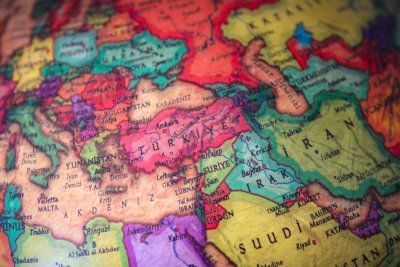
Roughly 40-50 countries experience armed conflict in 2025-2026.
There are armed conflicts in around 40-50 countries worldwide, depending on how a conflict is defined. The latest major studies provide these figures: 40 armed conflicts across the world, according to the School for a Culture of Peace at the Autonomous University of Barcelona.
How trustworthy are the IDF and Benjamin Netanyahu?
An examination of the IDF's military record and accountability mechanisms alongside Netanyahu's leadership credentials, corruption trials, and controversial judicial reforms.
Why did Arab states not intervene militarily in Gaza after October 2023?
Arab governments condemned Israel's actions but lacked military capacity, feared escalation, depended on U.S. support, and prioritised stability over intervention.
Netanyahu's long game in Gaza: containment, division and the path to October 7
Netanyahu pursued a strategy of containing Hamas through periodic military operations whilst preventing Palestinian unity, accepting fragmentation over statehood. Critics argue this approach inadvertently strengthened Hamas before the October 2023 attack.
Is there evidence that Netanyahu conspired with Hamas to gain control of Gaza?
No credible evidence supports claims that Netanyahu conspired with Hamas. While his policies have been controversial, the article examines the complex history between Israeli leadership and Hamas without finding proof of active collusion.
Could the deliberate ramming of one naval vessel into another be considered an act of war?
Deliberate ramming by a military vessel could constitute an act of war, depending on context, intent and nationality. Historical incidents show most have been resolved through diplomacy rather than escalation.
Whether U.S. weapons supply counts as a war loan depends on the specific arrangement and funding mechanism used
U.S. military aid takes multiple forms: grants requiring no repayment, Lend-Lease agreements that do, and direct sales. Most aid to Ukraine has been grant-based, not requiring repayment.
When did the UK repay its World War II loans to the USA and Canada?
Britain finished repaying American and Canadian loans from World War II on 29 December 2006, sixty years after borrowing $3.75 billion to rebuild after the war.
Understanding the historical, geopolitical and strategic factors behind Russia's 2022 invasion
Russia's invasion stemmed from historical claims, NATO expansion fears, strategic interests in Black Sea access, domestic political needs, economic leverage, security concerns, and ideological motivations regarding post-Soviet influence.
How much political leaders value soldiers' welfare varies widely depending on their motivations, political systems and the conflict's context.
Leaders' concern for soldiers varies by motivation, political system and conflict type. Democratic systems and public pressure tend to encourage greater concern, whilst accountability and military effectiveness remain key drivers.
The UN exercises diplomatic, legal, peacekeeping, humanitarian and development power, though constrained by member states' sovereignty. It sets global norms and coordinates responses to transnational challenges.
How the UN maintains peace, security, human rights and sustainable development globally
The UN coordinates international efforts on peacekeeping, human rights, development, humanitarian aid, environmental protection, and conflict resolution through its member states and specialised agencies.
How historical treaties, colonialism and the 'one country, two systems' principle shape China's sovereignty over Hong Kong
Hong Kong was ceded to Britain in the 19th century and returned to China in 1997 under 'one country, two systems'. Concerns have grown about eroding autonomy since the 2020 National Security Law.
China's actions towards Uighurs in Xinjiang stem from security concerns, ethnic tensions, assimilation policies, mass surveillance, forced labour allegations, and geopolitical factors.
A Turkic ethnic group with a rich history facing significant human rights concerns in modern-day China
The Uighurs are a Turkic ethnic group in northwest China with thousands of years of history and distinct cultural traditions. They face international concern over allegations of human rights abuses by Chinese authorities, including detention and cultural restrictions.
How Western investment and technology transfer might indirectly support China's defence capabilities
Foreign governments rarely directly fund China's military, but technology transfers, dual-use investments, and supply chains may indirectly enhance its capabilities. Export controls and investment screening aim to limit such risks.
Benjamin Netanyahu has faced multiple corruption allegations during his political career, leading to legal investigations and criminal charges
Netanyahu faces multiple corruption allegations including bribery claims, media interference charges, submarine procurement irregularities and misuse of public funds. He denies wrongdoing.
Why do the USA, UK and European countries support Israel?
Western support for Israel stems from historical ties, strategic interests, security cooperation, democratic values, Holocaust remembrance, and shared concerns about regional stability.
The complex history of land ownership and control in Gaza and the West Bank since Israel's establishment
Israel's creation in 1948 and subsequent wars transformed land ownership in Gaza and the West Bank, with ongoing disputes over settlements, confiscation and military control.
The historical, political and legal background to land ownership and control in Gaza
Israel gained control of Gaza following the 1948 war, then captured it from Egypt in 1967. The situation remains contested, involving settlements, blockades, and unresolved Palestinian claims.