Address benefits system costs, increasing productivity, developing engineering and technical carears through education realistic pay structures.
Britain could rebuild manufacturing by reducing industrial energy costs, improving education and skills training, making investment attractive, and connecting employment support to real vacancies.
AI could produce enormous benefits, but society and governments are not preparing adequately for the disruption.
Bill Gates argues AI will transform employment, healthcare and education, but warns governments lag behind in preparing for job displacement, social isolation and loss of critical thinking skills.
Countries fund and organise long-term care differently: some rely on public services, others on family support or insurance. The approach affects who pays, what services exist, and whether older people can afford care.
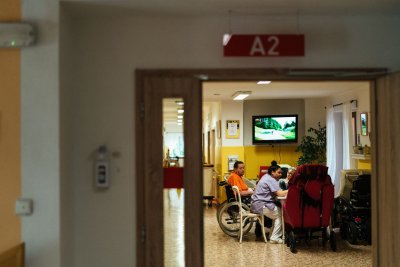
Care assistants in England earn around £12.71-£14 per hour, close to the National Living Wage. Pay differs little for experienced workers, raising questions about staff retention and continuity of care.
Care homes cost around £67,600 yearly per resident. Staffing accounts for 60% of expenses, with additional costs for buildings, food and utilities. Profitability varies widely.
Many older people in England experience loneliness and unmet care needs, but support services often fail to reach them. Services exist but gaps in eligibility, cost and accessibility leave vulnerable pensioners isolated.
Science has not established whether consciousness survives death. The Hadron Collider's discoveries about matter and energy do not provide evidence of an afterlife, though they deepen our understanding of the physical world.
No credible evidence supports claims that mpox was deliberately created or exaggerated
Mpox is a naturally occurring zoonotic virus first identified in 1958. Scientific consensus firmly rejects conspiracy theories lacking evidence for manufactured origins or deliberate exaggeration.
Building emotional strength and accountability helps children develop resilience without damaging their confidence or mental health
Teaching children to view feedback as learning, separating their actions from their identity, and modelling healthy responses to criticism helps them develop resilience whilst maintaining confidence.
How modern sensitivity to criticism shapes parenting, education, sports and work - and whether that's helping or harming development
Examines how 'woke' culture has softened criticism across parenting, schools, sports and workplaces, weighing benefits like emotional support against risks of reduced resilience.
Has 'woke' culture made young people more likely to avoid criticism?
Modern culture emphasises emotional sensitivity and kindness, which can make some young people reluctant to accept feedback, though the issue is more about how criticism is delivered than whether it should exist.
Mental health diagnoses have risen, but improved awareness and emotional literacy tell a more complex story
Rising anxiety and depression rates among young people reflect real new pressures, yet increased emotional awareness and recognition of previously hidden trauma complicate the picture of declining resilience.
Violence by pupils towards teachers stems from multiple factors including home environment, mental health issues, school resources, and societal influences. Responsibility is shared across children, parents, schools and society.
How prenatal screening, medical advances and evolving ethics are reshaping decisions about pregnancies with diagnosed fetal abnormalities
Prenatal screening is improving, gene therapy offers alternatives to termination, and public opinion varies by country. Disability rights advocates worry selective abortion may devalue disabled lives, whilst others emphasise parental choice.
Understanding alternative theories and why people believe them
Conspiracy theories propose hidden motives behind major events. The article examines ten prominent examples and explains why experts dismiss them, noting their psychological appeal and social impact.
Examining conspiracy theories about population control and the evidence behind them
The concept of 'manufactured human culling' lacks credible evidence and stems from conspiracy theories. Real concerns about population, health and inequality are addressed through science, ethics and international cooperation, not deliberate harm.
What does the evidence show about the origins of the virus that caused the pandemic?
Scientists largely support a natural origin for COVID-19, though a lab-leak remains under investigation. No conclusive evidence of deliberate engineering has been found.
The claim that AIDS was deliberately manufactured is a conspiracy theory without scientific basis
Scientific evidence shows HIV originated naturally from primates through zoonotic transmission. Conspiracy theories about deliberate creation lack credible support and have hindered public health efforts.
How faster treatment of mental illness and chronic conditions affects benefit claims
The NHS could help reduce Universal Credit claims by improving mental health services, managing chronic diseases, offering rehabilitation programmes, and addressing social determinants of health through collaboration with employers and social services.
Could a more efficient NHS reduce reliance on immigrant healthcare workers?
A better-functioning NHS might retain more staff and require fewer immigrant workers, but an ageing population and labour shortages mean immigration would likely remain essential.
How perceptions of moral decline have reflected Britain's evolving social, economic and cultural changes
Concerns about moral decline recur throughout British history, from industrialisation to social media, but reflect subjective values and generational perspectives rather than objective decline.
Was the coronavirus outbreak a world population cull event?
COVID-19 was a natural public health crisis caused by the SARS-CoV-2 virus, not a deliberate population control event. Scientific consensus supports a zoonotic origin, with global efforts focused on treatment, vaccination and saving lives.
Is the world heading toward a deliberate population cull?
There is no evidence of any planned population cull. Instead, governments address population challenges through sustainable development, education, healthcare and family planning services.
What would be the human and environmental consequences of a nuclear conflict between major powers?
A large-scale nuclear war would cause hundreds of millions of deaths through blast, radiation and fallout, plus environmental devastation, economic collapse and societal breakdown.
Have any pandemics come close to reducing the global population to under 500 million?
Historical pandemics including the Black Death, Spanish Flu and HIV/AIDS have caused millions of deaths but none approached reducing global population to under 500 million.
What policies and changes would be needed to maintain global population below 500 million?
Explores hypothetical strategies including family planning, women's education, financial incentives, voluntary programmes and sustainable development to achieve a global population below 500 million.
What are the Ten Commandments of the New Age inscribed on the Georgia Guidestones monument?
The Georgia Guidestones monument displays ten principles promoting environmental sustainability, global cooperation, responsible governance, and social justice as guidelines for humanity's future.
What are the Georgia Guidestones and why are they controversial?
A mysterious granite monument in Georgia inscribed with ten principles in eight languages, its anonymous creators and true purpose remain unknown and disputed.
Who benefits most from paid euthanasia? Financial, ethical and practical considerations
Examines arguments that euthanasia could reduce end-of-life healthcare costs, alongside ethical concerns about patient autonomy, coercion and whether palliative care investment offers a better approach.
Exploring the potential benefits of legalised euthanasia within the NHS
An analysis of hypothetical benefits of legalised euthanasia in the UK, including patient autonomy, relief of suffering, and potential cost savings, alongside recognition of ongoing ethical and legal concerns.
Examining the ethical, legal and societal implications of mandatory paid euthanasia for older adults
An examination of the ethical, legal and societal concerns raised by proposals for mandatory euthanasia for those aged 80 and over, and alternatives focused on palliative care and patient choice.
Understanding the ethical arguments for and against euthanasia
The article examines competing arguments on euthanasia: supporters emphasise patient autonomy and relief from suffering, whilst opponents raise concerns about sanctity of life and potential abuse.