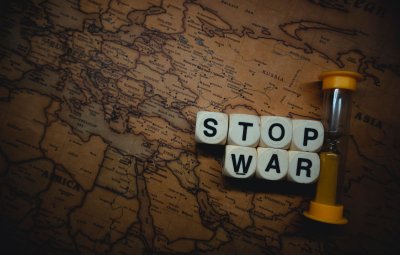
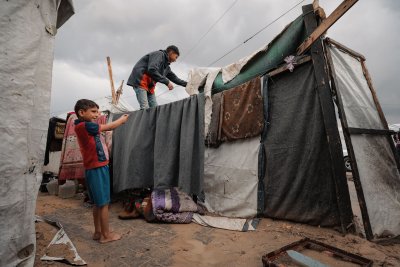
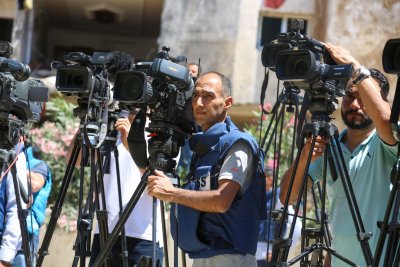
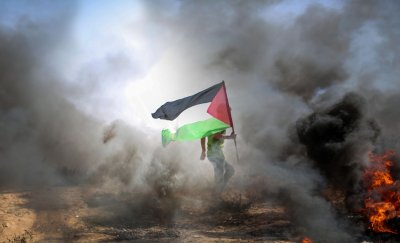
Roughly 40-50 countries experience armed conflict in 2025-2026.
There are armed conflicts in around 40-50 countries worldwide, depending on how a conflict is defined. The latest major studies provide these figures: 40 armed conflicts across the world, according to the School for a Culture of Peace at the Autonomous University of Barcelona.
How trustworthy are the IDF and Benjamin Netanyahu?
An examination of the IDF's military record and accountability mechanisms alongside Netanyahu's leadership credentials, corruption trials, and controversial judicial reforms.
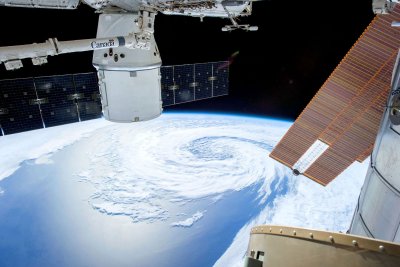
Satellites mostly help combat climate change by monitoring Earth's climate and improving predictions, though rocket launches produce emissions. Their overall impact remains small compared to fossil fuels.
About 3,038 non-active satellites remain in orbit, contributing to growing space debris concerns.
Approximately 3,038 dead satellites orbit Earth alongside thousands of rocket stages and debris pieces. Major space powers including the US, Russia and China have contributed most inactive satellites. Mitigation efforts include debris removal technologies and improved deorbiting protocols.
Who owns the 11,700 satellites orbiting Earth and what do they do?
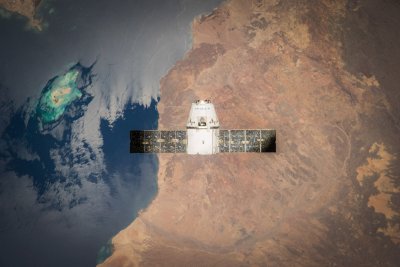
Approximately 11,700 active satellites orbit Earth, operated by private companies, governments and international organisations. SpaceX dominates with over 7,000 satellites, while the US, China and UK lead by country. Satellites provide communications, navigation, Earth observation and scientific research.
Why did Arab states not intervene militarily in Gaza after October 2023?
Arab governments condemned Israel's actions but lacked military capacity, feared escalation, depended on U.S. support, and prioritised stability over intervention.
Netanyahu's long game in Gaza: containment, division and the path to October 7
Netanyahu pursued a strategy of containing Hamas through periodic military operations whilst preventing Palestinian unity, accepting fragmentation over statehood. Critics argue this approach inadvertently strengthened Hamas before the October 2023 attack.
Is there evidence that Netanyahu conspired with Hamas to gain control of Gaza?
No credible evidence supports claims that Netanyahu conspired with Hamas. While his policies have been controversial, the article examines the complex history between Israeli leadership and Hamas without finding proof of active collusion.
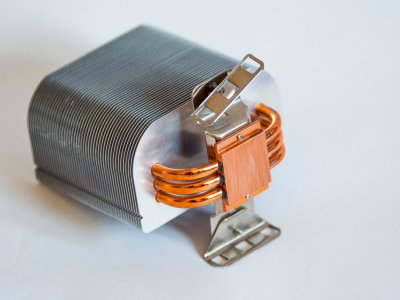
A step-by-step guide to building a thermoelectric generator that charges devices using heat from a candle
Instructions for assembling a DIY thermoelectric generator from affordable components that converts candle heat into USB power, plus the physics behind nuclear batteries.
How do betavoltaic batteries convert nuclear waste into electricity?
Betavoltaic batteries use radioactive isotope decay to generate electricity through thermoelectric conversion or semiconductor junctions, with applications in spacecraft and medical devices.
How radioisotope thermoelectric generators convert nuclear waste heat into electricity
Radioisotope thermoelectric generators convert heat from decaying nuclear materials into electricity. Building one requires specialized expertise, government approval, and poses serious safety and legal risks.
Could the deliberate ramming of one naval vessel into another be considered an act of war?
Deliberate ramming by a military vessel could constitute an act of war, depending on context, intent and nationality. Historical incidents show most have been resolved through diplomacy rather than escalation.
Whether U.S. weapons supply counts as a war loan depends on the specific arrangement and funding mechanism used
U.S. military aid takes multiple forms: grants requiring no repayment, Lend-Lease agreements that do, and direct sales. Most aid to Ukraine has been grant-based, not requiring repayment.
A history of US withdrawals from and violations of treaties and agreements
The US has withdrawn from or violated numerous international agreements across military, trade, climate, human rights and other areas, from the Paris Climate Agreement to Native American treaties.
No evidence proves Trump is a Russian agent, but his relationship with Russia has fuelled speculation and investigations
Investigations found no proof Trump is a Russian agent, though his pro-Russia rhetoric and policies sparked debate about whether he was influenced by or aligned with Russian interests.
When did the UK repay its World War II loans to the USA and Canada?
Britain finished repaying American and Canadian loans from World War II on 29 December 2006, sixty years after borrowing $3.75 billion to rebuild after the war.
Understanding the historical, geopolitical and strategic factors behind Russia's 2022 invasion
Russia's invasion stemmed from historical claims, NATO expansion fears, strategic interests in Black Sea access, domestic political needs, economic leverage, security concerns, and ideological motivations regarding post-Soviet influence.
How much political leaders value soldiers' welfare varies widely depending on their motivations, political systems and the conflict's context.
Leaders' concern for soldiers varies by motivation, political system and conflict type. Democratic systems and public pressure tend to encourage greater concern, whilst accountability and military effectiveness remain key drivers.
A medieval military order that protected pilgrims, fought in the Crusades and pioneered banking
A 12th-century Christian military order founded to protect pilgrims and defend Crusader territories. They became wealthy and powerful, pioneering banking services before being suppressed by the French king in the early 14th century.
A concept of increased global integration and cooperation, and the conspiracy theories surrounding it
The term 'New World Order' (NWO) refers to a hypothetical or speculative concept of a future global political, economic, and social system characterized by greater integration, cooperation, and governance at the international level.
The historical secret society and the conspiracy theories that surround it
The Illuminati was an 18th-century Bavarian secret society promoting Enlightenment ideas. It disbanded in the late 1700s, but modern conspiracy theories about it persist without credible evidence.
The symbolic meaning of the cable tow in Masonic initiation rituals
Freemasons use a noose, called a cable tow, symbolically in initiation ceremonies to represent obligation, self-discipline, and commitment to Masonic principles rather than any literal purpose.
The York Rite is an optional Masonic path offering additional degrees beyond the basic three, organised into chapters, cryptic degrees and chivalric orders focused on spiritual development.
A fraternal organization with medieval origins, rituals and charitable mission
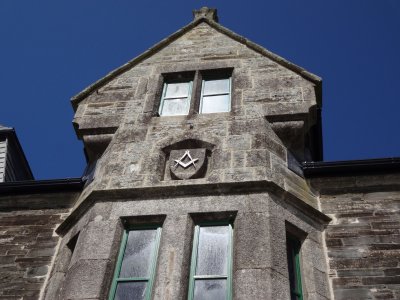
Freemasonry is a fraternal society originating from medieval stonemason guilds, organized into lodges with ritual degrees, promoting moral development, fellowship and charity worldwide.
Does attendance at Bilderberg meetings boost political careers?
Many prominent politicians have attended Bilderberg Group meetings, but evidence suggests attendance reflects networking rather than direct career advancement. Causation remains speculative.
From international cooperation proposals to conspiracy theories, what does 'New World Order' actually mean?
The New World Order concept ranges from legitimate proposals for global cooperation to unfounded conspiracy theories about secret elite control. Mainstream sources dismiss NWO claims as baseless, though real concerns exist about power concentration and global governance accountability.
What conspiracy theories surround the Bilderberg Group?
The Bilderberg Group attracts numerous unproven theories about global elite control, a New World Order agenda and media manipulation, though mainstream sources regard it as a networking forum.
How do we know about the Bilderberg Group despite its secrecy?
Information about the secretive Bilderberg Group comes from public statements by attendees, leaked documents, investigative journalism, historical records, and official disclosures, despite confidentiality expectations.
An invitation-only conference for influential figures from politics, finance and media that meets annually behind closed doors.
An annual private conference bringing together around 120-150 influential politicians, executives and academics to discuss global issues confidentially, which has attracted conspiracy theories about its influence.
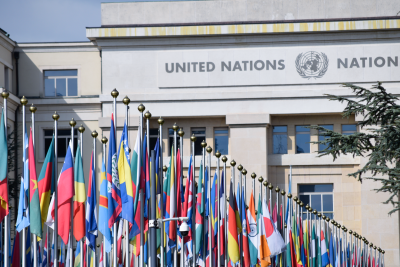
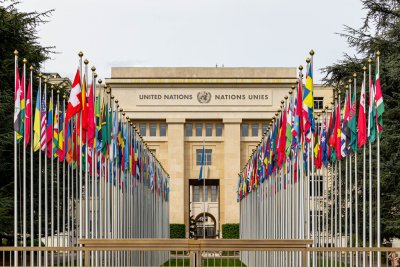
The UN exercises diplomatic, legal, peacekeeping, humanitarian and development power, though constrained by member states' sovereignty. It sets global norms and coordinates responses to transnational challenges.
How the UN maintains peace, security, human rights and sustainable development globally
The UN coordinates international efforts on peacekeeping, human rights, development, humanitarian aid, environmental protection, and conflict resolution through its member states and specialised agencies.