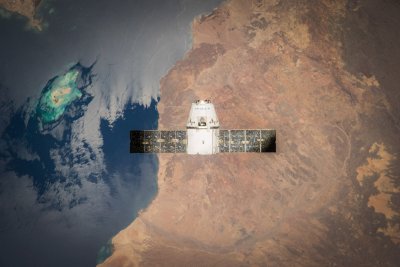
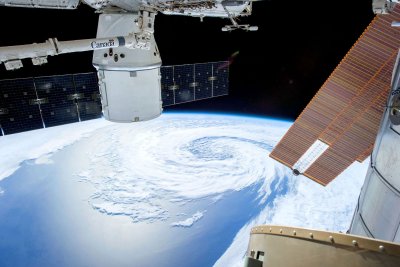
Satellites mostly help combat climate change by monitoring Earth's climate and improving predictions, though rocket launches produce emissions. Their overall impact remains small compared to fossil fuels.
About 3,038 non-active satellites remain in orbit, contributing to growing space debris concerns.
Approximately 3,038 dead satellites orbit Earth alongside thousands of rocket stages and debris pieces. Major space powers including the US, Russia and China have contributed most inactive satellites. Mitigation efforts include debris removal technologies and improved deorbiting protocols.
Who owns the 11,700 satellites orbiting Earth and what do they do?
Approximately 11,700 active satellites orbit Earth, operated by private companies, governments and international organisations. SpaceX dominates with over 7,000 satellites, while the US, China and UK lead by country. Satellites provide communications, navigation, Earth observation and scientific research.
A step-by-step guide to building a thermoelectric generator that charges devices using heat from a candle
Instructions for assembling a DIY thermoelectric generator from affordable components that converts candle heat into USB power, plus the physics behind nuclear batteries.
How do betavoltaic batteries convert nuclear waste into electricity?
Betavoltaic batteries use radioactive isotope decay to generate electricity through thermoelectric conversion or semiconductor junctions, with applications in spacecraft and medical devices.
How radioisotope thermoelectric generators convert nuclear waste heat into electricity
Radioisotope thermoelectric generators convert heat from decaying nuclear materials into electricity. Building one requires specialized expertise, government approval, and poses serious safety and legal risks.