Why aren't IPP prisoners automatically compensated for years served beyond their tariff?
· Updated · No. 206
IPP prisoners detained beyond their tariff are not automatically entitled to compensation unless specific legal breaches occurred, such as unlawful delay or defective sentences subsequently quashed.
Compensation for people who were kept in prison under IPP beyond what was justified, there is a complicated distinction.
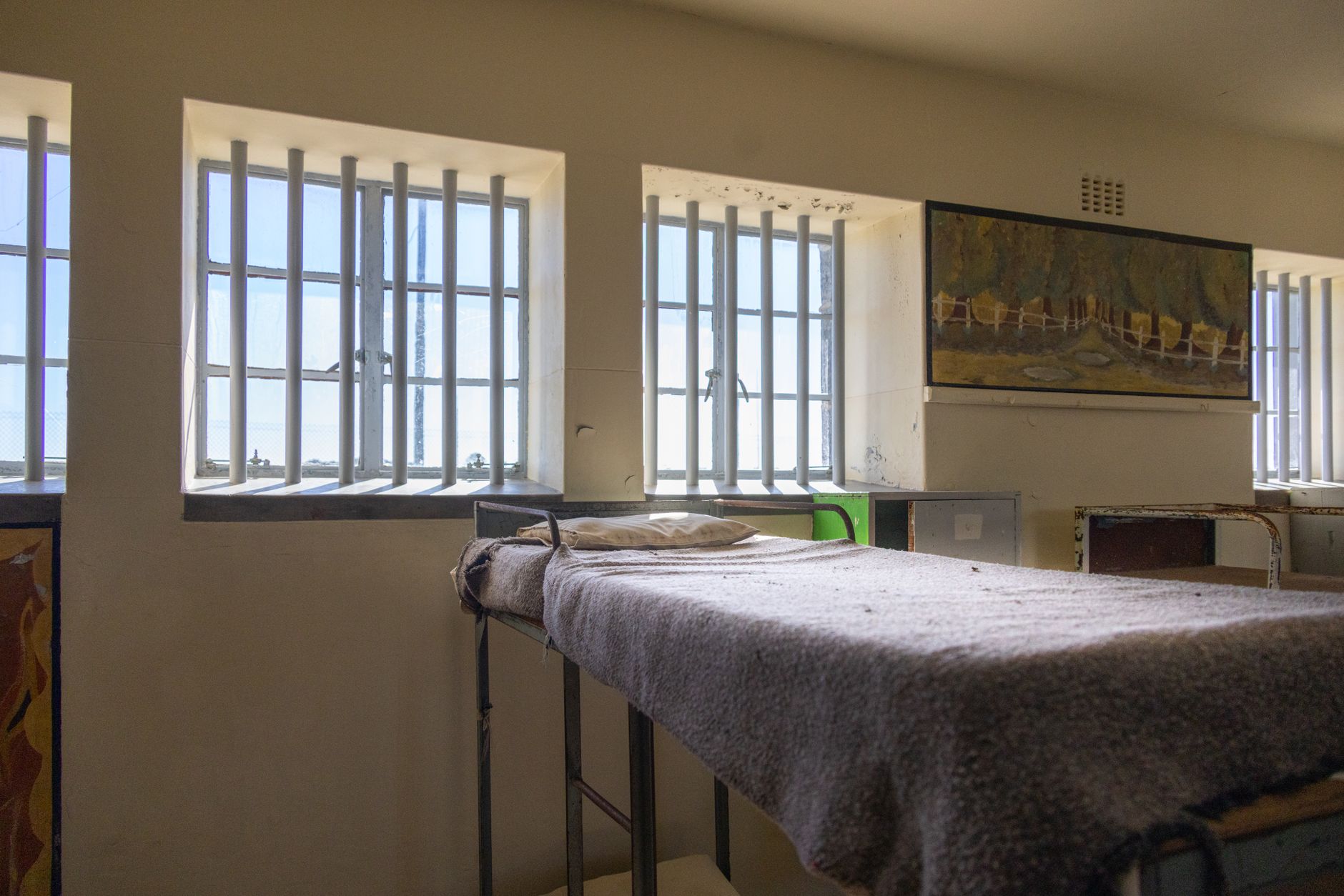
Parliament has not created a scheme that automatically compensates someone simply because they served many years beyond their original IPP tariff.
That is important because an IPP tariff was a minimum term, not a maximum sentence. Legally, continuing detention could be authorised if the Parole Board considered the person still presented an unacceptable risk. The CCRC still describes IPPs in this way today.
But compensation has been possible in particular circumstances
The leading case was James, Wells and Lee v Secretary of State for Justice.
The three men had IPP tariffs of:
James - 2 years
Wells - 12 months
Lee - 9 months
They argued that the state had failed to provide the courses and rehabilitation opportunities necessary for them to demonstrate to the Parole Board that they were safe to release. The House of Lords recognised the government's failure to provide those opportunities and considered the question of compensation.
The crucial limitation was that a breach of the government's public-law duty did not automatically make the imprisonment unlawful or create an automatic right to damages.
The court indicated that compensation could arise under Article 5(5) of the European Convention on Human Rights where detention was found to have been in breach of Article 5.
In other words:
'You were imprisoned for longer than your tariff' does not by itself mean 'the government owes you compensation.'
You generally need something additional - for example, an established legal error, unlawful detention, or a Convention-rights breach causing compensable loss.
There is another route for people whose IPP sentence itself is overturned
This is becoming particularly significant in 2026.
The CCRC is currently reviewing a large number of old IPP/DPP cases. In April 2026, the Court of Appeal quashed the indeterminate sentences of six people, three following CCRC referrals. The CCRC said those three had been convicted as young men more than 15 years earlier and had remained in custody despite tariffs of no more than 3½ years.
And in June 2026 the CCRC referred two more cases involving men who had received 18-month and two-year minimum terms but were still imprisoned nearly 20 years later.
If an individual's conviction or sentence is successfully overturned, that can create a much stronger basis for considering compensation, depending on the circumstances.
But again, it isn't automatic.
What about miscarriage-of-justice compensation?
There is a statutory compensation scheme under section 133 of the Criminal Justice Act 1988, but it is principally for people whose conviction has been reversed or who have received a free pardon, subject to the statutory test.
Therefore, an IPP prisoner who remains convicted of the original offence cannot simply apply for section 133 compensation because the IPP system was subsequently abolished.
That is one reason the distinction between:
'the IPP system was abolished'
and
'my particular IPP sentence was unlawful or has been quashed'
is so important.
The really uncomfortable question
Imagine somebody:
committed an offence in 2005 -> received an IPP with a two-year tariff -> completed the two years -> spent another 14 years in prison -> was eventually released.
If the sentence was legally valid throughout and the Parole Board repeatedly determined that continued detention was justified, there isn't an automatic entitlement to 12 years' compensation.
But if it can subsequently be established that the person's continued detention resulted from a legal error, failure to provide necessary rehabilitation, an unlawful decision, or an improperly imposed sentence, the position can be very different.
And that is why the current CCRC work is potentially important. It is now looking at whether some historical IPP sentences were legally defective in their individual circumstances, rather than simply asking whether IPP as a system was a bad idea.
One thing I would like to investigate further
There is a fascinating question here:
How much money, if any, have former IPP prisoners actually received in compensation - and how many successful claims have there been?
That is different from asking whether compensation was legally possible. It would tell us whether the people affected by the IPP scandal have actually received financial redress.
The clearest compensation case: James, Wells and Lee
The European Court of Human Rights ruled in 2012 that the UK's failure to provide timely access to rehabilitation courses had made the three men's post-tariff detention arbitrary, violating Article 5(1) of the European Convention on Human Rights. Importantly, the Court did not rule that IPP sentences themselves were unlawful.
The three men had remarkably short tariffs:
| Prisoner | Original IPP tariff | Period relevant to ECHR award | Compensation |
|---|---|---|---|
| Brett James | 2 years | 5 months | €3,000 |
| Nicholas Wells | 12 months | 21 months | €6,200 |
| Jeffrey Lee | 9 months | 30 months | €8,000 |
The Court also ordered €12,000 each for legal costs and expenses.
The UK government subsequently confirmed to Parliament that the compensation and costs were paid in March 2013.
But notice what the Court did not award
This is crucial.
The prisoners argued that they should receive compensation for the loss of liberty and, in some cases, loss of earnings. The Court rejected the claims for pecuniary damage because it could not establish that they would necessarily have been released earlier even if the rehabilitation system had worked properly.
Instead, the awards were for the distress and frustration caused by being detained without timely access to the necessary courses.
So, for example, Wells had sought £190,000 in non-pecuniary damages. He received €6,200.
That illustrates why this case did not open the door to thousands of automatic compensation claims.
This is the really important legal point.
The European Court's finding was specific to the circumstances of these three men.
It did not say:
'Everyone who has served beyond their IPP tariff is entitled to compensation.'
In fact, the Court expressly recognised that passing the tariff date did not itself establish that the prisoner should have been released. The Parole Board still had to determine whether the person posed an unacceptable risk.
The problem in James, Wells and Lee was more specific:
The state had failed to give them timely access to the rehabilitation programmes needed to demonstrate whether they could safely be released.
That distinction is legally fundamental.
There was subsequently litigation involving Nicholas Faulkner, another IPP prisoner.
His case concerned delay in getting a proper Parole Board review.
The Supreme Court ultimately awarded £10,000 for ten months' loss of conditional liberty in the circumstances of his case. The reasoning distinguished between:
delay which merely caused frustration; and
delay where it could be established that the person would have been released earlier but for the unlawful delay.
That second situation provides a much stronger basis for damages.
This is an important development because it demonstrates that actual financial compensation can be considerably more substantial where unlawful delay demonstrably caused someone to remain imprisoned when they otherwise would have been released.
Here we have to be careful.
I cannot find an official government figure saying 'X IPP prisoners have received £Y in compensation.'
The government publishes extensive IPP statistics, but it does not appear to maintain a consolidated public compensation register covering all successful claims.
That means it would be misleading for me to give you a supposed total.
What we can establish from the published legal record is:
Confirmed ECHR awards
James - €3,000
Wells - €6,200
Lee - €8,000
= €17,200 compensation
plus €36,000 costs.
And there have been other individual domestic cases involving compensation for unlawful delay, such as Faulkner's £10,000 award.
People who were imprisoned for decades after receiving sentences that, in ordinary circumstances, might have resulted in only a few years in prison.
The legal position creates a rather extraordinary situation.
Consider Christopher Brown, whose case the CCRC referred to the Court of Appeal in June 2026.
He was 18 years old when he set fire to two wheelie bins. He received an IPP with a minimum term of 18 months.
Nearly 20 years later, he was still in custody.
The CCRC has now referred his case for appeal.
Similarly, Jamie Jackson, aged 19 when convicted, received an IPP with a two-year minimum tariff and was still in custody nearly 20 years later when his case was referred.
And in April 2026 the Court of Appeal quashed the IPP sentences of six people, including three CCRC referrals. Those three had all been convicted as young men more than 15 years earlier and none had received a tariff exceeding 3½ years.
That is potentially much more significant for compensation than the original James/Wells/Lee litigation.
Why?
Because if an IPP sentence itself is quashed, the legal question changes from:
'Was the state slow in providing rehabilitation?'
to potentially:
'Was this person unlawfully subjected to an indeterminate sentence in the first place?'
That could materially alter the basis on which compensation might be pursued.
The situation in 2026
The CCRC says it is currently examining more than 180 additional IPP/DPP cases and has referred nine such cases during 2026.
It has also specifically begun examining historic IPP/DPP cases involving young people, following Court of Appeal decisions concerning the importance of age and maturity when assessing dangerousness.
And in August 2026 the CCRC referred the case of Simeon Gamage, who received a two-year-six-month IPP tariff after robbery offences committed at age 24 and remained in custody. The CCRC considered there was a real possibility that the Court of Appeal would find that insufficient weight had been given to his age and immaturity when assessing dangerousness and future risk.
So there is now a developing route by which individual IPP sentences can be challenged and potentially quashed, rather than relying upon the government to introduce blanket re-sentencing.
One thing worth considering
Being imprisoned beyond one's tariff ≠ automatically being entitled to compensation.
But:
an unlawful detention, unlawful delay, or an IPP sentence subsequently quashed can create a substantially stronger legal basis for compensation.
That distinction explains much of the apparent anomaly you've been asking about: why people can spend many years beyond a very short tariff without the government automatically paying them compensation.

Comments
No answered comments yet. Yours could be the first.
Add a comment
Your email address is needed so we can reply, and is never shown on the site. Comments appear here once they have been answered.