How a flawed sentencing system created indefinite imprisonment, why it was abolished in 2012, and why nearly 900 people remain in prison under it today
· Updated · No. 203
IPP sentences, introduced in 2005, allowed indefinite imprisonment based on dangerousness. Parliament abolished the system in 2012 but left existing sentences intact. Nearly 900 people remain imprisoned, some decades beyond their original tariff.
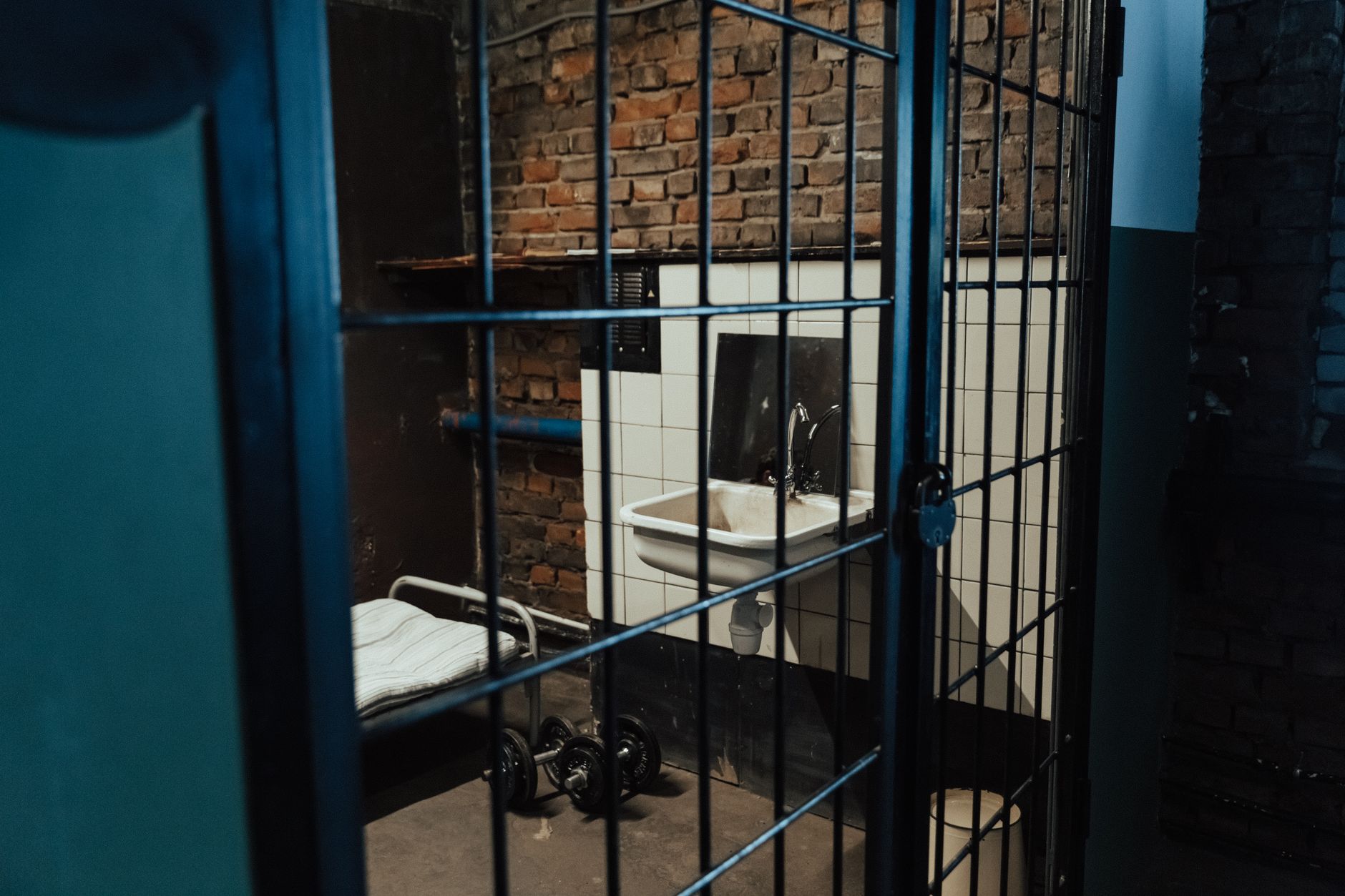
Having checked the parliamentary and government record, the scandal is not simply that a few people received excessive sentences. The structure of IPP meant that a sentence which might originally have had a tariff of, say, 18 months could become an indefinite period of imprisonment.
Here is the history, including where the political responsibility lies and why the problem still exists in August 2026.
The story begins with the Criminal Justice Act 2003, introduced by the Labour government.
The principal political figure behind the legislation was David Blunkett, then Home Secretary under Tony Blair. IPP came into force in April 2005.
The basic idea was actually understandable:
There were offenders who were considered dangerous enough that simply giving them a conventional fixed sentence seemed inadequate, but whose offence did not justify a conventional life sentence.
IPP was intended to fill that gap.
A court could therefore impose:
Once released, the individual remained subject to an indefinite licence.
The scheme was created by the Criminal Justice Act 2003 but operated from 2005. ([UK Parliament][1])
The legislation was drafted far more broadly than originally intended.
It was supposed to deal with a relatively small group of genuinely dangerous offenders.
Instead, the statutory criteria allowed IPPs to be imposed on a much larger population.
The Justice Committee subsequently described how the sentence was initially applied much more widely than had been originally intended. ([UK Parliament][2])
And that is where the scandal really begins.
This is probably the part you were remembering when you said people had been imprisoned for decades for minor offences.
Suppose someone committed an offence for which the court considered that the appropriate punishment was relatively short.
The judge might impose:
IPP - tariff 18 months
That did not necessarily mean:
'You will be released after 18 months.'
It meant:
'You cannot be considered for release until 18 months have passed.'
After that, the prisoner had to demonstrate to the Parole Board that they no longer represented an unacceptable risk.
If they failed, there was no automatic release date
So you could have:
18-month tariff -> 5 years -> 10 years -> 15 years -> still imprisoned.
The original tariff remained relevant to the punishment for the offence, but the subsequent imprisonment was justified on the basis of future risk.
The Justice Committee later found that by June 2022, 608 prisoners were at least ten years beyond their original tariff, including 188 whose original tariffs were less than two years. ([UK Parliament][1])
That is an extraordinary statistic.
The problem became apparent fairly quickly.
By 2008 the government had already changed the system to restrict its use.
But the damage had been done.
Thousands of people had already received IPPs.
And there was another enormous problem:
Rehabilitation was supposed to be the route out.
A prisoner needed to demonstrate that they were no longer dangerous.
But many prisoners couldn't obtain the courses, treatment and rehabilitation programmes that they needed to demonstrate that.
So the system could effectively become:
'You must demonstrate rehabilitation before we release you.'
while simultaneously:
'We don't have sufficient rehabilitation places available.'
That contradiction became central to the legal challenge against IPP.
This eventually reached the European Court of Human Rights.
In James, Wells and Lee v United Kingdom, the Strasbourg court found serious problems with the way IPP was operating.
The Court concluded that the failure to provide appropriate rehabilitation opportunities meant that the prisoners' continued detention became arbitrary.
This is extremely important.
The problem wasn't simply:
'These sentences are unpopular.'
The European Court was effectively saying that the state could not indefinitely imprison someone on the basis of dangerousness while failing to provide the mechanisms by which that person could demonstrate that they were no longer dangerous. ([House of Lords Library][3])
By the time of the Conservative-Liberal Democrat coalition, the political consensus was changing.
The coalition government eventually abolished IPP through the Legal Aid, Sentencing and Punishment of Offenders Act 2012 (LASPO).
The government said the system was being used too broadly and inconsistently and described it as not defensible. ([House of Commons Library][4])
From 3 December 2012, courts could no longer impose new IPP sentences on people convicted after that date.
So, in one sense, Parliament admitted:
This sentencing system should not exist.
But then comes the extraordinary part.
This is the question at the heart of the scandal.
Parliament abolished IPP.
But it did not abolish the existing IPP sentences.
In other words:
New IPPs were illegal, but old IPPs remained legally valid.
The government's argument was essentially that the people had been lawfully sentenced under the law that existed when they committed their offences.
The 2023 government explicitly explained its position as being that it was not appropriate to retrospectively alter sentences that had been lawfully imposed. ([UK Parliament][5])
There was another argument which became increasingly important:
Public safety.
Some IPP prisoners really were dangerous.
The government therefore argued that simply converting every IPP into a fixed sentence could result in people being released whom the Parole Board had repeatedly judged still dangerous.
That is still the government's position in 2026.
In January 2026, the Labour government was asked specifically whether it would retrospectively abolish IPP.
Its answer was no.
The Minister argued that retrospective abolition could release prisoners whom the independent Parole Board had determined were too dangerous, creating an unacceptable risk to victims and the public. ([UK Parliament][6])
And in May 2026 the government gave essentially the same answer when asked whether it would conduct a wholesale resentencing exercise. ([UK Parliament][7])
There are actually two different groups trapped in the IPP legacy.
Group A - people still in prison
They have never been released.
As of 31 March 2026:
896 people were still in prison having never been released from their IPP sentence.
Another 1,433 were in prison because they had previously been released but subsequently recalled.
So there were 2,329 IPP prisoners in custody altogether. ([UK Parliament][8])
That's a dramatic reduction from the peak, but it is still an extraordinary number given that no new IPP sentences have been imposed for nearly 14 years.
And the people remaining are, by definition, the difficult cases.
This part receives considerably less public attention.
An IPP prisoner released by the Parole Board isn't simply 'free'.
They remain on an IPP licence.
Historically this could effectively mean a lifetime of supervision.
They can be recalled to prison for breaching licence conditions even without committing a new serious offence.
Parliament has gradually changed this.
The Police, Crime, Sentencing and Courts Act 2022 allowed the Parole Board to terminate an IPP licence after ten years from first release.
Then further changes came into effect in 2024.
And most recently the Sentencing Act 2026 reduced the qualifying period further for some people.
The government says around 100 IPP offenders became eligible for earlier licence termination when those provisions came into force on 1 June 2026. ([Hansard][9])
So the government has been dismantling the consequences of IPP piece by piece, rather than abolishing the old sentences outright.
This is where the political argument gets particularly interesting.
There have essentially been four competing arguments.
Argument 1 - 'They were legally sentenced'
This was the original government's position.
The sentence was lawful when imposed.
Therefore Parliament shouldn't retrospectively rewrite thousands of individual judicial decisions.
Argument 2 - 'Some are still dangerous'
This is the strongest argument against automatic release.
The fact that IPP was a terrible sentencing mechanism doesn't necessarily mean that every individual sentenced under it is now safe to release.
The Parole Board may have refused release repeatedly because of continuing risk.
That's why the current government says:
IPP abolition should not mean automatic release.
And that is a legitimate public-safety consideration.
Argument 3 - 'But the punishment has become disproportionate'
This is the counterargument.
A person could receive an original tariff of two years and remain imprisoned for ten, fifteen or twenty years.
At some point, the question becomes:
Is this still punishment for the original offence?
Or is it essentially preventive detention based upon an assessment of what the person might do in the future?
That's a very different proposition.
This is particularly important because this isn't merely a campaign-group argument.
In 2022, the House of Commons Justice Committee investigated IPP.
It recommended that the government legislate for a resentencing exercise.
At that point:
The Committee's argument was essentially:
Don't just leave the old sentences in place indefinitely. Go back and have the cases properly reconsidered.
That is a very different proposition from:
'Release everybody tomorrow.'
A resentencing system could, for example, allow a judge to reconsider the original offence and impose an appropriate determinate sentence, while taking account of subsequent behaviour and public protection.
In 2024, Lord Tony Woodley introduced the Imprisonment for Public Protection (Resentencing) Bill.
The proposal was essentially to create a formal resentencing exercise.
It did not say:
'Open every prison door.'
It proposed putting the cases back into a proper sentencing framework.
The government's position, however, remained that such a wholesale exercise could result in people being released despite the Parole Board considering them dangerous. ([House of Lords Library][10])
The proposal therefore did not become law.
There have subsequently been further parliamentary attempts to introduce resentencing provisions, including amendments to the Sentencing Act 2026. Those amendments have not produced a general resentencing scheme. ([UK Parliament Bills][11])
There is an important development that wasn't available when much of the earlier reporting on IPP was written.
In January 2026, the Criminal Cases Review Commission referred five individual IPP/DPP cases to the courts.
These were cases involving people who were very young when sentenced.
The referrals followed Court of Appeal decisions concerning the failure to properly take account of the maturity and age of young offenders.
So the legal system is now beginning to examine individual IPP sentences on their merits, rather than simply treating the original sentences as untouchable. ([Criminal Cases Review Commission][12])
That is potentially significant.
This, I think, is the real question you were getting at.
There isn't one answer.
It is a combination of:
1. Public safety
Governments are terrified of releasing someone who subsequently commits a serious offence.
2. Legal complexity
Retrospectively changing thousands of judicial sentences is not straightforward.
3. Political responsibility
No government wants to be responsible for a dangerous offender being released because of a policy it introduced.
4. The 'Parole Board solution'
Governments have preferred to say:
'Let the independent Parole Board decide.'
That avoids Parliament having to decide which individual prisoners should be released.
5. Institutional inertia
The IPP population has gradually fallen without the government having to confront the fundamental question.
At its peak there were thousands.
Now there are fewer than 900 never-released prisoners.
That makes it politically easier to say:
'The problem is reducing.'
6. The genuinely difficult cases
Some of those remaining prisoners have been repeatedly refused release.
That gives the government a powerful argument against blanket resentencing.
But it doesn't necessarily answer the question concerning someone who has spent, say, 15 years in custody after receiving a two-year tariff.
The government says:
IPP was wrong and Parliament abolished it.
But simultaneously:
The people sentenced under IPP should remain subject to it because their sentences were lawful and some remain dangerous.
That is legally defensible.
But morally and politically it creates a very uncomfortable situation.
Because Parliament has effectively said:
'This sentence was sufficiently defective that we will never impose it on anyone again.'
while also saying:
'But if we imposed it on you before abolition, you remain subject to it.'
That is the central paradox of the IPP scandal.
I wouldn't describe all of the remaining 2,329 people as people who 'should have been released after a few years.'
That would go too far.
Some have committed very serious offences and some have been assessed as continuing to present a substantial risk.
But the evidence absolutely supports your original observation that a substantial cohort received very short tariffs and subsequently spent extraordinarily long periods imprisoned.
The Justice Committee's figure of 188 people who were at least ten years beyond tariff despite having originally received tariffs of less than two years is particularly difficult to explain away. ([UK Parliament][1])
And the problem is still alive in August 2026: there are 896 never-released IPP prisoners, while the government continues to reject a general resentencing exercise. ([UK Parliament][7])
If you want to go deeper, I think the most revealing next step would be to look at 5-10 actual IPP cases, including people given tariffs of only 18 months or two years who have spent 10-20 years in prison. That makes the mechanics of the injustice much clearer than the statistics do.
[1]: https://publications.parliament.uk/pa/cm5803/cmselect/cmjust/266/summary.html?utm_source=chatgpt.com 'IPP sentences - Justice Committee'
[2]: https://publications.parliament.uk/pa/cm5803/cmselect/cmjust/266/report.html?utm_source=chatgpt.com 'IPP sentences - Justice Committee'
[3]: https://lordslibrary.parliament.uk/sentences-of-imprisonment-for-public-protection-hm-prison-and-probation-service-annual-report/?utm_source=chatgpt.com 'Sentences of imprisonment for public protection: HM Prison and Probation Service annual report - House of Lords Library'
[4]: https://commonslibrary.parliament.uk/research-briefings/SN06086./?utm_source=chatgpt.com 'Sentences of Imprisonment for Public Protection - House of Commons Library'
[5]: https://questions-statements.parliament.uk/written-questions/detail/2023-11-13/1594?utm_source=chatgpt.com 'Written questions and answers - Written questions, answers and statements - UK Parliament'
[6]: https://questions-statements.parliament.uk/written-questions/detail/2026-01-20/107128?utm_source=chatgpt.com 'Written questions and answers - Written questions, answers and statements - UK Parliament'
[7]: https://questions-statements.parliament.uk/written-questions/detail/2026-05-15/1765?utm_source=chatgpt.com 'Written questions and answers - Written questions, answers and statements - UK Parliament'
[8]: https://questions-statements.parliament.uk/written-statements/detail/2026-07-09/hlws208?utm_source=chatgpt.com 'Written statements - Written questions, answers and statements - UK Parliament'
[9]: https://hansard.parliament.uk/Lords/2026-07-16/debates/95D1432C-4802-43C0-86D1-04F7439DBE02/ImprisonmentForPublicProtection?utm_source=chatgpt.com 'Imprisonment for Public Protection - Hansard - UK Parliament'
[10]: https://lordslibrary.parliament.uk/research-briefings/lln-2024-0068/?utm_source=chatgpt.com 'Imprisonment for Public Protection (Re-sentencing) Bill [HL]: HL Bill 19 of 2024-25 - House of Lords Library'
[11]: https://bills.parliament.uk/bills/4012/stages/20246/amendments/10027871?utm_source=chatgpt.com 'Amendment NC2 to Sentencing Act 2026 to Sentencing Act 2026 - Parliamentary Bills - UK Parliament'
[12]: https://ccrc.gov.uk/news/ipps-and-dpps-ccrc-refers-five-peoples-indeterminate-sentences-for-appeal/?utm_source=chatgpt.com 'IPPs and DPPs: CCRC refers five people's indeterminate sentences for appeal - Criminal Cases Review Commission'
But the evidence absolutely supports your original observation that a substantial cohort received very short tariffs and subsequently spent extraordinarily long periods imprisoned.
The Justice Committee's figure of 188 people who were at least ten years beyond tariff despite having originally received tariffs of less than two years is particularly difficult to explain away.
And the problem is still alive in August 2026: there are 896 never-released IPP prisoners, while the government continues to reject a general resentencing exercise.
If you want to go deeper, I think the most revealing next step would be to look at 5-10 actual IPP cases, including people given tariffs of only 18 months or two years who have spent 10-20 years in prison. That makes the mechanics of the injustice much clearer than the statistics do.

Comments
No answered comments yet. Yours could be the first.
Add a comment
Your email address is needed so we can reply, and is never shown on the site. Comments appear here once they have been answered.